Overview
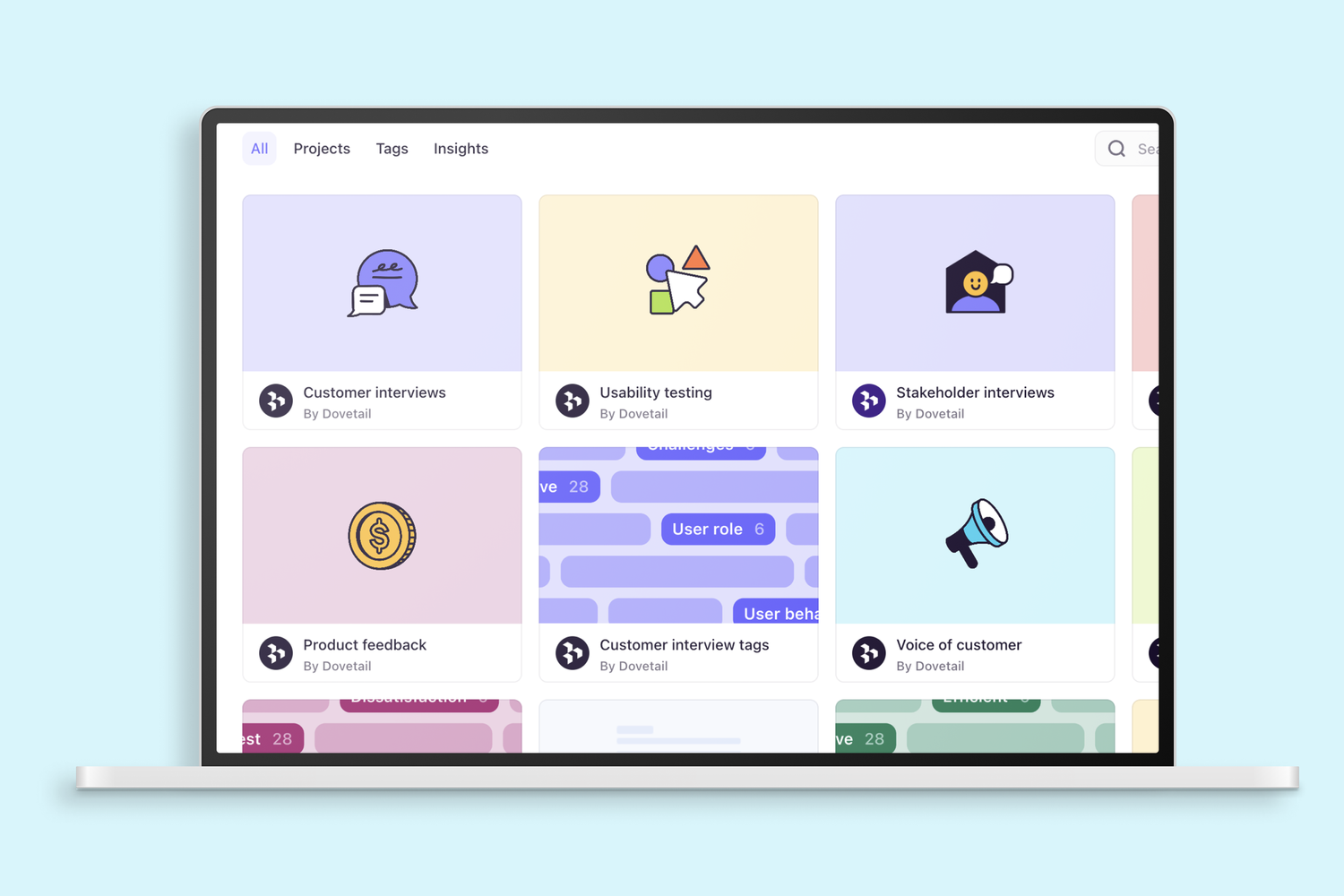
At Radicle Health, I led the development of a cross-functional UX research system to support four major product areas — Billing, Axiom, AWARDS, and the Client Portal. Each product had different user bases and maturity levels, but none had a consistent way to conduct or share research. I created a flexible, sprint-based process that scaled across teams, centralized insights in Dovetail, and embedded user research into how we shaped, validated, and improved our products.
The Challenge
While each team at Radicle valued user input, research was often ad hoc, undocumented, or siloed. Product decisions were made with partial insights, and there was no consistent process to learn from users — or build on what others had already discovered. Core problems I identified:
- Inconsistent or missing research practices across product lines
- Lack of shared language or insight repository
- Interviews and insights were getting lost in individual files
- Teams wanted to move fast, but had no clear path for integrating research
Goals
The primary objectives for building this scalable research system:
- Standardize research across product teams without slowing them down
- Make research findings accessible and usable long-term
- Create a tagging system to reveal patterns across product areas
- Encourage early discovery, not just reactive testing
What I Did
I implemented a four-part system to scale research across the organization:
1. Introduced Research Sprints
I designed a lightweight research sprint model tailored to the Shape Up process. Each sprint included: a shared planning doc (goals, hypotheses, methods), pre-built interview guides and usability tasks, time-boxed cycles (2–4 weeks), and standard deliverables: brief, summary, and insights. These sprints helped normalize when and how to involve users — especially during shaping and post-launch reflection.
2. Set Up Information Architecture + Tagging in Dovetail
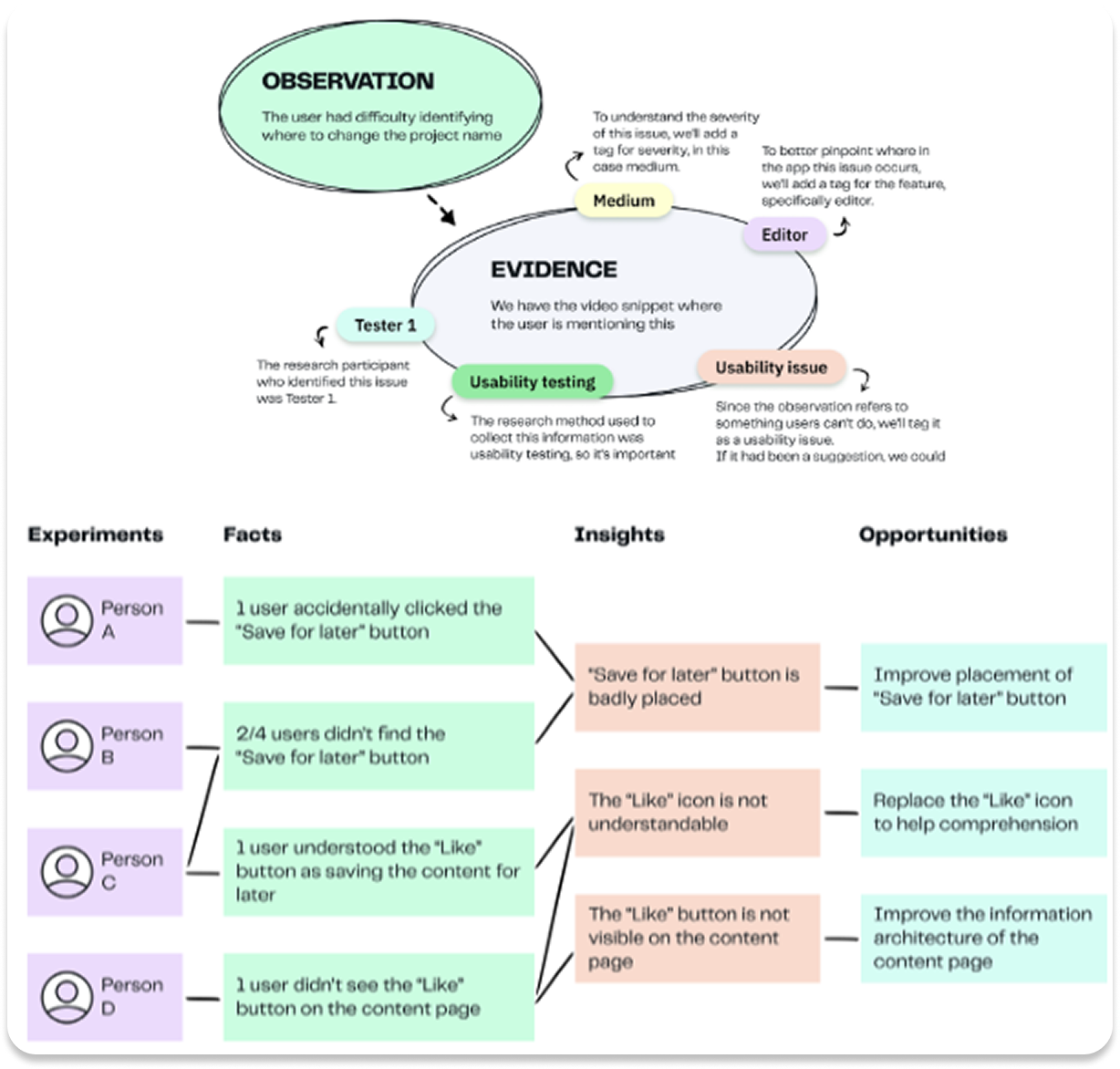
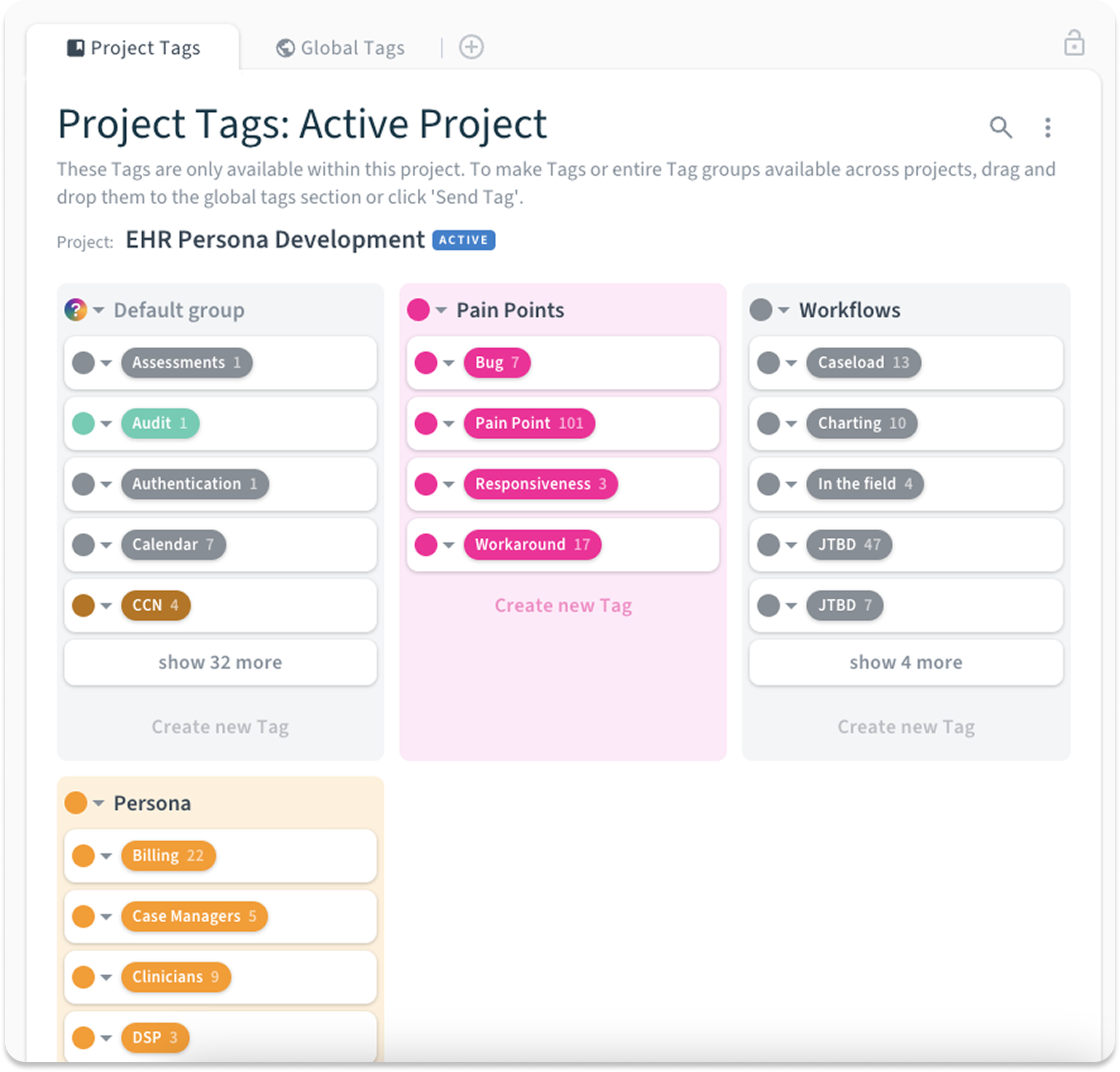
To centralize insights and make cross-product learning possible, I led the setup of Dovetail with a structured IA and tagging system: built a taxonomy for tagging by user role, theme, product area, and sentiment; created reusable highlight templates (e.g., Pain Point, Opportunity, Quote); set up collections organized by product area and research type; and tied tags back to our evolving personas and workflows. This turned scattered interview notes into searchable, cumulative insight libraries.
3. Rolled Out a Mixed-Methods Toolkit
To go beyond interviews, I layered in: usability testing benchmarks (sentiment and usability baselines, task success rates), surveys to validate feature importance and workflows, and behavioral analytics via Pendo (where available) for real-world context. Example: for AccuBill, we tracked task completion rates and sentiment metrics as indicators of success, alongside qualitative feedback.
4. Scaled Across Four Product Areas
Each area used the same core process and lived in the same Dovetail system, making cross-team knowledge sharing frictionless:
- Billing: Research informed AccuBill's redesign, with a focus on pre-charge check workflows and usability benchmarking
- Axiom: Introduced early user interviews and usability testing of main workflows to prioritize items for an already packed roadmap
- AWARDS: Deep discovery via persona work, navigation testing, and collaboration with PMs on workflow gaps
- Client Portal: Card sorting, user interviews, and surveys shaped onboarding and feature prioritization
Results as of April 2025
- Research embedded in every major product area — Billing, Axiom, AWARDS, and the Client Portal — with dedicated sprints influencing roadmap decisions
- Increased stakeholder engagement, with product managers, engineering leads, and CX teams referencing insights during shaping cycles
- Standardized sprint templates and tagging systems reused across teams, leading to faster research cycles and easier cross-product learning
- Research demand growing, with teams requesting discovery and validation ahead of feature development
What I'd Do Next
- Expand training so PMs can run lightweight testing on their own
- Use Dovetail metrics to identify high-impact themes across products
- Formalize a "research ops" role or tooling support for long-term scaling